
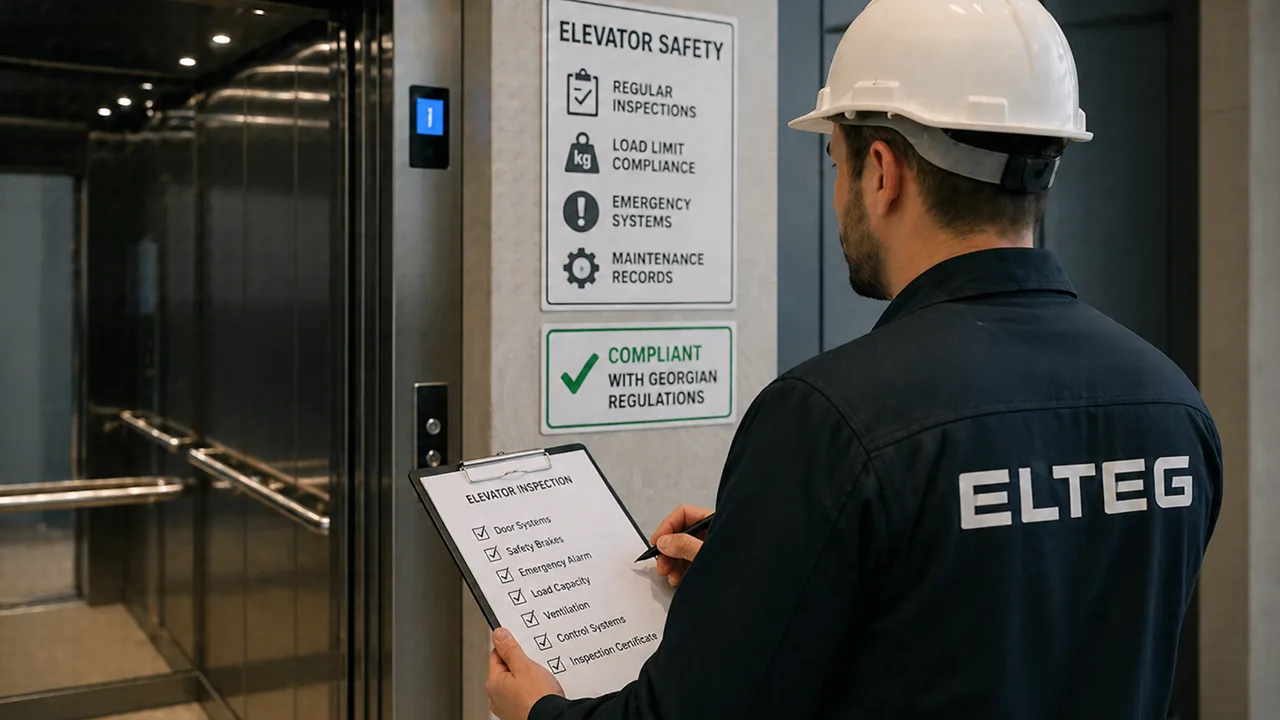
Elevator Safety and Regulations in Georgia: What Should You Pay Attention To?
When implementing a construction project, especially in the case of high-rise buildings, the planning and installation of elevator systems are strictly regulated by legislation. Compliance with these requirements is not only a legal obligation, but also a fundamental guarantee of safety for the building’s future residents and visitors.
In Georgia, this field is mainly regulated by Government Resolution No. 41, “Technical Regulation – Building Safety Rules.” Let’s review the key aspects that every developer and architect should take into account.
Definition of a High-Rise Building
The first thing to know is that, according to legislation, a building is considered a high-rise building if the floor level of its highest occupied storey is located more than 23 meters above the lowest point accessible to a fire truck.
Much stricter requirements apply to this type of building.
Fire Safety Requirements
In the event of a fire, the elevator shaft can become one of the main spaces that supports the spread of fire. That is why fire safety measures are extremely important. The relevant regulations are based on this very practical risk.
In high-rise buildings, the elevator shaft is protected by elevator doors with at least 90 minutes of fire resistance, which helps prevent flames from entering the shaft and spreading to other levels of the building.
In addition, in high-rise buildings, the elevator shaft must be subject to air pressurization in the event of a fire. When fire detectors are activated, a special pressurization system installed in the building is triggered, creating positive pressure inside the shaft and protecting it from flame penetration.
This shows that the industry has carefully considered safety and developed protective measures that must be followed during elevator planning in buildings.
Since an elevator is something we use every day, we should also treat it responsibly, avoid damaging it, and use its full operational capacity safely and comfortably. As a rule, elevator usage instructions for passengers are always displayed inside the cabin, and every user should be aware of them.
In the event of a fire, passengers must not use the elevator and should evacuate using the stairs only. However, in high-rise buildings, elevators may have a special function that allows them to be used only by the fire brigade: for firefighting operations and, if necessary, for evacuating injured persons from the building.
Therefore, an elevator is a highly intelligent system and plays one of the key roles in a building’s overall safety strategy.
Key Requirements Under Resolution No. 41
In the event of a fire, the elevator system becomes critically important. Resolution No. 41 requires the following:
Fire-resistant shafts and lobbies:
The elevator shaft and the lobby on each floor must be separated by fire-resistant barriers with at least 1-hour fire resistance, in order to limit the spread of fire and smoke.
Backup power supply:
In high-rise buildings, elevators must be connected to a backup power supply system so that they do not stop operating if the main power supply fails.
Firefighter and rescue elevators:
In buildings where an occupied floor is located above 37 meters, it is mandatory to have at least two special elevators accessible to firefighting and rescue units. The load capacity of such elevators must be at least 1,600 kg.
Evacuation and Accessibility
Legislation also regulates passenger evacuation and building accessibility in detail.
Evacuation elevators:
In certain cases, it is permitted to use standard passenger elevators for occupant evacuation, provided that they meet special requirements.
Accessibility for persons with disabilities:
All passenger elevators must be accessible to persons with disabilities.
Stretcher-capable elevator:
In buildings with more than 4 floors above or below ground level, at least one elevator must be large enough to accommodate a standard stretcher measuring 60 cm x 215 cm in a horizontal position.
Conclusion
Navigating the complex framework of elevator safety regulations and ensuring compliance can be a challenging process.
Our team ensures that every component and engineering solution selected for your project fully complies with the strict requirements of Resolution No. 41, helping protect you from both legal and operational risks.