
Why Is Elevator Speed Important in High-Rise Buildings?
A modern high-rise building is not only about architectural height. It is a complex engineering system where residents, employees, guests, visitors, and service personnel move every day. In such buildings, an elevator is no longer just a means of transportation – it is one of the key elements of the building’s functionality, comfort, and efficiency.
Elevator speed is especially important in high-rise residential complexes, hotels, business centers, and commercial buildings, where proper passenger flow management directly affects user experience, waiting time, and the overall value of the building.
The Elevator as the Main System of a Vertical City
A high-rise building can be compared to a vertical city. Offices, residential apartments, hotels, retail areas, restaurants, and public spaces can all be combined within one structure. At this scale, architecture is no longer evaluated only by its façade and visual form. Its success also depends on how quickly, safely, and comfortably people can move inside the building.
This is where the importance of elevator speed begins.
If an elevator is slow or incorrectly selected, waiting time increases, queues appear, work processes are delayed, and the user experience becomes weaker. In a high-rise building, proper elevator planning becomes just as important as the structure, façade, interior, or engineering communications.
An Interesting Example: Guangzhou CTF Finance Centre
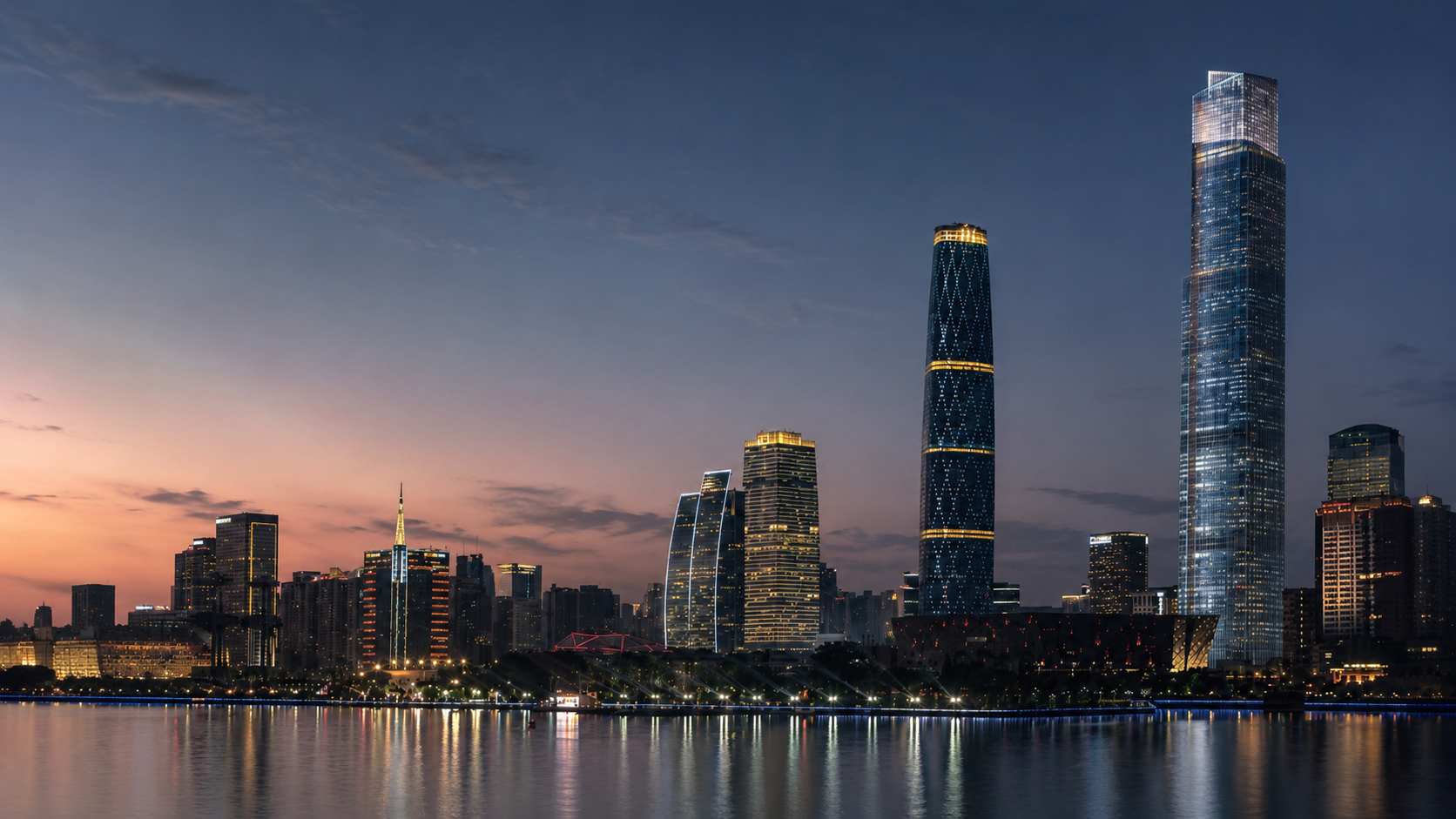
A good example of the importance of elevator speed is the Guangzhou CTF Finance Centre in China – a 530-meter, 111-storey skyscraper located in Guangzhou’s business district. The building combines offices, apartments, a hotel, and retail spaces.
In a project of this scale, the internal mobility system is critically important. When a building has more than 100 floors, the elevator is no longer just an element of comfort – it is infrastructure that determines how efficiently the building functions in real life.
Buildings like the Guangzhou CTF Finance Centre show that in modern architecture, height is not only a visual impression. The real challenge begins inside the building – how people move, how long they wait for the elevator, and how comfortable the everyday experience is.
Why Is Elevator Speed Important?
Elevator speed in a high-rise building is a matter of time management. The taller the building, the more important it becomes for passengers to reach their destination quickly and comfortably.
In a business center, a slow elevator means lost time for employees. In a hotel, it can negatively affect the guest experience. In a residential complex, it can become a daily source of discomfort for residents.
A properly selected elevator speed helps the building operate more efficiently, reduces waiting time, and creates a high-standard user experience.
Speed Alone Is Not Enough
In a high-rise building, elevator speed should not be evaluated separately. An efficient elevator system depends on several factors: the number of elevators, capacity, floor zoning, control system, building purpose, and expected peak-hour traffic.
For example, if a large number of people move through the building every day, one fast elevator will not be enough. Proper engineering planning is required so that elevator speed, capacity, and quantity match the actual needs of the building.
This is why elevator selection should begin not only with price, but with a technical analysis of the project.
What Should Developers Consider When Choosing an Elevator?
When selecting an elevator for a high-rise building, developers should consider the number of floors, daily passenger flow, building function, peak-hour traffic, elevator speed, capacity, safety standards, and future technical maintenance conditions.
A properly planned elevator system at the early stage reduces future risks, prevents overload, decreases queues, and improves the overall functionality of the building.
Elevator Speed and Building Value
Users may not know the technical specifications of an elevator, but they always feel whether a building is comfortable. If movement is fast, smooth, and well-organized, the building is perceived as higher quality and more premium.
This is especially important in hotels, business centers, and high-class residential complexes, where every detail affects the project’s image, customer satisfaction, and real estate value.
A properly selected elevator system increases building comfort, reduces user dissatisfaction, and strengthens the investment value of the project.
Speed and Safety
Elevator speed should never be considered separately from safety. In a high-rise building, an elevator must be not only fast, but also stable, smooth, reliable, and compliant with international safety standards.
For passengers, the ideal elevator is one that moves quickly while also ensuring comfortable travel, smooth stops, and a high level of safety.
That is why elevator selection requires a professional engineering assessment that considers speed, safety, load, and long-term technical maintenance.
Why Should Elevator Planning Start at the Early Stage of a Project?
Proper elevator planning should begin at the early architectural and engineering stage of a project. If the shaft, technical space, load, or number of elevators is not defined correctly, additional changes may be required later, increasing costs and delaying the construction process.
Involving elevator specialists at an early stage helps developers define technical requirements correctly, reduce risks, and choose the optimal solution in terms of both budget and quality.
Conclusion
In a high-rise building, elevator speed is not just a technical specification. It affects the building’s comfort, functionality, safety, and final value.
A modern building is successful not only because of how high it rises, but also because of how quickly, safely, and comfortably people can move inside it.
An elevator is not just a device – it is an important part of the building’s functionality, comfort, and value.
ELTEG offers elevator selection, installation, and technical maintenance with a professional engineering approach – from project planning to operation.
Receive Professional Consultation
Are you planning a high-rise residential, hotel, or commercial project?
Contact ELTEG and receive professional engineering consultation for your building.
Website: www.elteg.ge
Email: info@elteg.ge
Tel: +995 322 770 200
Say hello to us
You must be logged in to post a comment.