
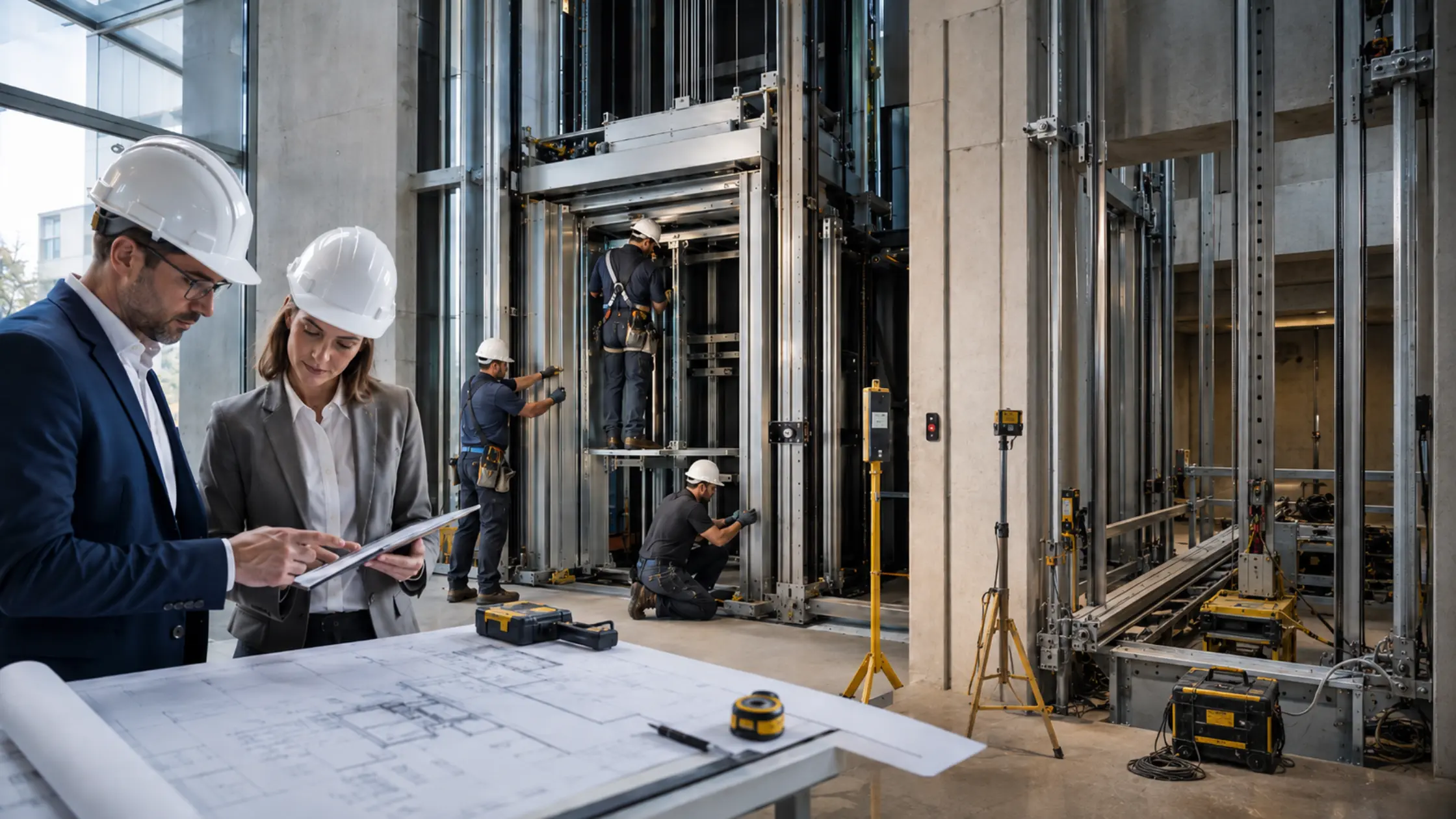
Elevator Installation in Georgia: A Complete Guide from Planning to Operation
Choosing an elevator is not just a technical decision. For developers, architects, hotel owners, commercial property managers, and private building owners, an elevator directly affects the safety, comfort, value, and long-term performance of a building.
A well-planned elevator system improves passenger flow, reduces operational risks, supports accessibility, and strengthens the overall perception of the property. A poorly planned elevator, on the other hand, can create delays, additional construction costs, maintenance issues, and dissatisfaction among residents, guests, or visitors.
That is why elevator installation should begin long before the equipment arrives on site. It starts at the planning stage — with the right technical assessment, correct shaft dimensions, traffic analysis, product selection, installation planning, and after-sales service strategy.
In this guide, we explain the main stages of elevator installation in Georgia, from the first consultation to final operation and maintenance.
1. Initial Consultation and Project Assessment
The first stage of elevator installation is understanding the project itself.
Before choosing a specific elevator model, the engineering team should analyze the type of building, the number of floors, expected passenger flow, available shaft space, architectural limitations, and future usage intensity.
For example, a residential building, hotel, hospital, shopping center, office building, and industrial facility all require different elevator solutions. A hotel elevator should support comfort, quiet movement, and premium guest experience. A hospital elevator should focus on safety, accessibility, stretcher movement, and reliability. A residential building needs long-term efficiency, easy maintenance, and durable operation.
At this stage, the main questions are:
- What type of building is being developed?
- How many people will use the elevator daily?
- What speed and capacity are required?
- Is the shaft already designed or still adjustable?
- Are there accessibility requirements?
- What budget and timeline does the project have?
- What design style should the cabin match?
This early assessment helps avoid expensive mistakes later in the construction process.
2. Technical Planning and Elevator Selection
After the initial assessment, the next step is selecting the right technical solution.
This includes choosing the elevator type, capacity, speed, drive system, door type, cabin dimensions, control system, and interior design. In modern construction, the elevator should not be treated as a standard product. It should be selected according to the building’s function, traffic needs, and long-term business goals.
Common elevator types include:
- Passenger elevators
- Freight elevators
- Hospital elevators
- Panoramic elevators
- Home elevators
- Car elevators
- Accessibility lifts and platforms
For many modern buildings, machine-room-less elevators are a practical solution because they help save space and integrate more easily into contemporary architectural concepts. For larger or more complex buildings, a more customized technical solution may be required.
At this stage, the elevator company should provide engineering recommendations that balance safety, performance, energy efficiency, design, and budget.
3. Shaft and Construction Readiness Check
One of the most important parts of the elevator installation process is checking whether the building is ready for installation.
Even the best elevator equipment cannot perform properly if the shaft, pit, overhead space, power supply, or structural conditions do not meet technical requirements.
Before installation begins, engineers usually check:
- Shaft dimensions
- Pit depth
- Overhead clearance
- Wall and structural conditions
- Power supply readiness
- Machine room or machine-room-less requirements
- Door openings
- Site safety conditions
- Access for equipment delivery
This stage is especially important for developers because small inaccuracies in the shaft can cause major delays, additional costs, and technical complications.
The earlier the elevator company is involved in the planning process, the lower the risk of construction mistakes.
4. Commercial Offer and Budget Planning
After the technical requirements are clear, the elevator company prepares a commercial proposal.
The price of an elevator depends on several factors, including:
- Elevator type
- Number of stops
- Capacity
- Speed
- Brand and country of origin
- Cabin design
- Door type
- Control system
- Installation complexity
- Delivery timeline
- Warranty and service conditions
It is important to understand that the cheapest elevator is not always the most cost-effective solution. A low initial price may later result in higher maintenance expenses, more frequent technical problems, lower comfort, and shorter equipment lifespan.
Developers should evaluate the total cost of ownership, not only the purchase price. This includes installation quality, energy consumption, spare parts availability, warranty terms, maintenance service, and long-term reliability.
5. Production and Delivery
Once the elevator specifications are confirmed and the order is placed, the equipment goes into production.
For international brands, the production and delivery timeline depends on the technical configuration, customization level, production schedule, logistics, and project deadlines.
During this stage, clear communication between the elevator company, developer, architect, and construction team is essential. Delivery should be aligned with the construction timeline to avoid site delays or storage issues.
A professional elevator company should manage the process carefully, from order confirmation to logistics coordination and final arrival on site.
6. Installation Process
Elevator installation is a complex engineering process that must be performed by qualified professionals.
The installation process usually includes:
- Delivery and unloading of equipment
- Installation of guide rails
- Installation of the cabin frame
- Installation of counterweight system
- Door installation
- Motor and control system installation
- Electrical connection
- Safety component installation
- Cabin interior installation
- System calibration
Every step requires precision. Even small installation errors can affect ride comfort, noise level, safety, and long-term performance.
This is why certified and experienced installation teams are essential. Elevator installation is not only about placing equipment inside a shaft; it is about ensuring that the entire system works safely, smoothly, and reliably for years.
7. Testing, Safety Checks, and Commissioning
Before an elevator becomes operational, it must go through a full testing and commissioning process.
This stage ensures that the elevator meets technical, safety, and performance requirements. Engineers check the movement quality, door operation, braking system, emergency functions, communication systems, control panel, sensors, and overall ride comfort.
The goal is to make sure that the elevator is ready for safe daily operation.
Testing may include:
- Load testing
- Door safety checks
- Emergency system testing
- Brake system inspection
- Control panel testing
- Ride quality assessment
- Final technical adjustments
Only after successful testing should the elevator be handed over for use.
8. Handover and User Guidance
After installation and testing, the elevator is handed over to the client.
At this stage, the building owner, property manager, or technical team should receive all necessary information regarding elevator use, safety instructions, maintenance schedule, warranty terms, and emergency contact procedures.
A professional handover process creates clarity and reduces future operational risks.
For residential buildings, hotels, commercial properties, and public buildings, it is especially important that the responsible staff understand how to communicate with the elevator service provider in case of technical issues.
9. Preventive Maintenance and 24/7 Technical Support
Elevator installation does not end when the system starts working. In reality, long-term performance depends heavily on regular maintenance.
Preventive maintenance helps detect issues before they become serious problems. It also extends the lifespan of the elevator, improves passenger safety, reduces downtime, and protects the building owner from unexpected repair costs.
A proper maintenance plan should include:
- Regular technical inspections
- Cleaning and lubrication of key components
- Door mechanism checks
- Safety system inspection
- Electrical system monitoring
- Emergency system testing
- Spare parts planning
- Fast response in case of malfunction
For hotels, hospitals, office buildings, shopping centers, and large residential complexes, 24/7 technical support is not a luxury. It is a critical requirement for operational continuity and user safety.
10. Why Early Elevator Planning Matters
Many construction projects make the mistake of thinking about the elevator too late.
However, elevator planning should begin during the architectural and engineering design stage. Early involvement of an elevator company helps optimize the shaft, avoid redesign costs, improve traffic flow, select the right product, and protect the project timeline.
For developers, early elevator planning means:
- Fewer construction risks
- Better budget control
- Faster installation process
- More accurate technical documentation
- Better user experience
- Higher long-term property value
The elevator is one of the most frequently used systems in any multi-storey building. It deserves strategic planning from the beginning.
How to Choose the Right Elevator Company in Georgia
When selecting an elevator company, developers and property owners should look beyond the product itself.
The right partner should offer a full-cycle service, including consultation, technical planning, supply, installation, warranty, maintenance, spare parts, and emergency support.
Important selection criteria include:
- Proven experience in the Georgian market
- Strong project portfolio
- International brand partnerships
- Certified installation teams
- Compliance with safety standards
- 24/7 technical support
- Availability of spare parts
- Transparent communication
- Experience with similar building types
For developers, the elevator company is not just a supplier. It is a long-term technical partner.
Why Choose ELTEG for Elevator Installation in Georgia
ELTEG provides full-cycle elevator solutions — from consultation and project planning to supply, installation, technical maintenance, warranty service, and spare parts.
With long-term experience in the Georgian market and a strong portfolio of completed projects across residential, hospitality, commercial, public, healthcare, and industrial sectors, ELTEG helps clients choose elevator systems that match both technical requirements and business goals.
Through its official partnership with KLEEMANN, ELTEG offers access to European-quality elevator solutions, flexible cabin design options, reliable technology, and professional engineering support.
For developers, architects, and building owners, ELTEG’s key value is simple: the company does not only install elevators. It helps create safer, more efficient, more comfortable, and more valuable buildings.
Conclusion
Elevator installation is a strategic part of every modern building project. It influences safety, comfort, accessibility, operating costs, property value, and user satisfaction.
A successful elevator project requires much more than equipment supply. It requires correct planning, technical expertise, professional installation, safety testing, and long-term maintenance.
Whether you are developing a residential complex, hotel, office building, hospital, shopping center, or private property, the best results come when the elevator is planned early and managed by an experienced engineering partner.
If you are planning a new project, the smartest first step is to request a technical consultation before construction details are finalized.
Say hello to us
You must be logged in to post a comment.